Forfeiting grace


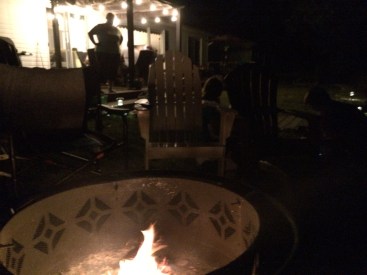
img_1043It was quite a few years ago, by bonfire much like this, that I opened my Bible for direction. My husband and I had just got done discussing the challenges that children can go through, and as they grow, the more difficulties they can face. Like most parents, we lamented and worried about how we could protect our son from such difficulties. Both of our hearts wereimg_0987 heavy as we thought on the painful trials and tribulations life can bring, and how much we wanted to keep him safe and untouched by hurt. As the discussion deepened over the temptations that grow with age, both of us espoused the feeling of fear compounded with uncertainty of how to guard him from the pains that we could remember from childhood or had seen others go through as well as choices made early in life that may later be regretted.

As the evening grew and the conversation ended, I felt more unsettled.  You see, I like to have a plan.  I like to feel like I have some control of what is coming.  I have learned that most people in life desire the same thing.  In fact, I haven’t met a person yet who doesn’t seek to control their world.  Some do it quietly and others do it loudly.  Some manipulate and others are more direct; each seeking to obtain a way to control, though by different means and methods.  And so, I opened God’s word hoping for some insight and instruction as to the anxious feelings I was experiencing about not being able to stop what my son may have to go through off in the future land of growing up.

Much to my surprise, I opened to the story of Jonah and laid eyes on Jonah 2:8 (NIV). Honestly, my first thought was “What?  Worthless idols, clinging, forfeiting?  Where? How? I don’t think so.”   But years of being in His word brought me back to trying to understand more of what this verse meant.  Was it saying something about my life?

“Those who cling to worthless idols forfeit the grace that could be theirs.”


I started with grace.  Grace is not limited to just the concept of “saving grace” as we so often like to think of.  Instead it can involve things like happiness, contentment, trust, goodness; in a way, the qualities of life, a good life, that is produced as the life is being lived.  Understanding that the word “forfeit” meant to give up something, the verse nudged me to ask myself the following questions:  Where and what grace am I relinquishing unnecessarily?  And how?

God had me hooked.  I wanted to know more.  So I dug deeper into the other words and began thinking about my life.  As I explored “idols”, I was able to draw the inference through its synonyms, and the origin of its roots, that fears and passions can become our “idols”.  It was there in the word “fear” that I realized what I was doing.  I was fearing the future unnecessarily rather than living in the reality of the moment where there was no need for that overwhelming fear.  I was forfeiting the grace of the gentle descent of theimg_5884 beautiful sunset while sitting by a warm and captivating bonfire, and surrounded by the peaceful sounds of children’s laughter and joy as they happily embraced the delight of a summer evening.  The gift of those sights and sounds lost in the relentless chattering of those far-off fears…

I soon realized that by tending and nurturing those fears with worry and anxiety of what could be, though was not, I was clinging to my fears rather than turning to God about them.  Honestly, the fears I was so tightly holding onto and wrestling with were not even a part of his world or ours.  They were, instead, a mirage that did not emerge as we drew closer to those points in time.  And isn’t that so often true with those giant fears that clamor for our attention in the here and now?  We plan, we worry, we thwart, and we seek to prevent only to learn that the adversary never presented itself when the time came.

Those who cling to worthless fears of the future lose the happiness and peace that today has to offer.  Let’s break that down a little more…that each moment has to offer. These moments where God is trying to give to us beauty, happiness, quiet, rest, hope, security, reassurance; you name it.  Yet, we shrug them off embracing a fear that time, itself, routinely proves worthless.

It was an incredible moment and verse that truly has not left my side since.  Every time I am pretending to be brave but filled with fear, God either brings it back to my mind or I open to Jonah 2:8 as a reminder (and question) of what I am truly trusting in.  And every time, I think I am done with it or have figured out all of its nuances, I learn something new…

Friends, it is amazing to think that by embracing worthless fears–by clinging to them– we are literally forfeiting grace God intended for us.  We, ourselves, are choosing to let go of the good God has planned and has in store for our lives.

Go deeper yet: how is that not an idol?  When we choose to embrace the fear, that is worthless, over God, who has empowered us to find courage and bravery, are we not then putting something over Him and His plans for us?  Might it be that we are placing created fear over the Creator?

Be willing, my friends, and He will show where you are choosing fear over grace in your life.  Trust me, it will be more than you ever realized…and then as you release its control, you will find more grace than you ever knew could exist in this life.

Oh, the places we can go and things we can do when we refuse to let worthless fears be in control of this life that God has given us to live.

img_6092

“I sought the Lord and He answered me; He delivered me from all my fears.”                    Psalm 34:4


Permission to feel this life

I must confess that this morning, I started out getting tasks done for the day rather than going to His Word. Sometimes I need a bit of reminder of that being the wrong order (for myself), especially when I am feeling like I have a lot to do. I was posting pictures of things happening around here onto FBF’s Facebook page and wanted to attach a verse. The first set of pages I opened to spoke about sin and backsliding…hmmm, what could that be about? Maybe not starting my day with Him, as one of many potentials. It is so easy to say “I don’t have time to be in my Bible; He’ll understand that!” While He does understand my temptation (He’s God), I think He clearly wanted me to trust Him that our time together is as valuable as any of those tasks. Hence, starting my morning with Him was a lesson I learned long ago. It might be why the word “backslide” appeared ;o)

Since I did not seeing anything that I liked to attach to the post, I opened the Word again. This time to Ecclesiastes 7 and my heart was moved by what I read. Again, the verse didn’t quite work with the story I was sharing, but I knew it was something I was meant to share…with some of you. I decided to post this here in hopes that someday, if not already, it might be useful to you.

Several, including myself, are entering into the holidays with something that wasn’t present for most of our lives: the heaviness of grief. For each of those that I know, it stems from the loss of a loved one. For some, it is the first set of holidays with this new vacancy of their loved one.  And the funny thing is, the term “loved one” implies so much that might not be an accurate descriptor. We want to love and sometimes no matter how much we try, it may not be received the way we wanted or have helped in the way we had hoped. That, my friends, can be the result of a multitude of things.

In Ecclesiastes 7, the heading for the chapter is simple, “Wisdom.” I think that is a perfect label for the difficult topic it covers. Let’s plunge a little deeper into it.

“A good name is better than fine perfume, and the day of death better than the day of birth.” Ecc. 7:1

So many times, I hear people celebrate and be incredibly joyful about the birth of a child. And it is a very amazing event to happen in life. But too often, I see and hear of people doing all that they can to avoid the day of death in another as well as in themselves. In my journey, I have been privileged to come alongside people in the end of their days, down to their dying breath. And while it is–at times overwhelming and frightening, I can–without a doubt–call it a privilege. No matter the suffering, to walk another home–quietly–to God’s hands is the closest we can get to seeing heaven’s door open while here on earth. And my friend, how you handle death is a reflection on your integrity and trustworthiness in the eyes of others (“a good name”). As you go through life and begin to experience more of death being near, it might be good to hold this verse close as comfort even in the midst of great pain so that you can accurately value its presence among us.

“It is better to go to the house of mourning than to go to a house of fasting, for death is the destiny of every man; the living should take this to heart.” Ecc. 7:2

My friends, I was in awe of these verses and how they support leaning into the pain of grief rather than avoiding it. It is surreal to watch people as death approaches a loved one. So many times, the souls act as if death should never have come. They try to keep it at bay through denial, avoidance and clinging to false hopes. But it is the destiny of every man. A house of fasting makes me think of the soul who is trying to withhold something…trying to avoid.

The first definition of “fast” (before you get to the withholding of food) contains this:

6. Characterized by hectic activity;
7. Resistant;
8. Firmly fixed in place; not easily moved; securely attached;
11. Closed and made secure;
13. Firm in adherence, loyal, devoted…

Sometimes we tend to fight off mourning through hectic activities coupled with an attitude of resistance to the gravity of the pain and loss (even if the loss is more about the potential than the actual) we are truly experiencing. Our feet are dug in refusing to move towards or feel what needs to be processed. And somehow, in that struggle to avoid what we fear in mourning, we become closed off to it and mistaken in thinking that we are secure from it. With firm adherence to avoidance, we refuse ourselves the passage of grief. The toll of pain we shut down, believing there is some better road. Only to complicate it more, we become stubbornly loyal and devoted to the living memory of them by refusing the painful truth that they are gone from this life…from the land of the living to the land we are all destined to go.

Accepting that death is the destiny for each can open the door of our hearts to the idea that sorrow is the key to beginning to work and understand and allow the truth to take hold in our minds. Mourning is the healthiest approach we can take, and we, as the living, would be wise to pay close attention to it.

“Sorrow is better than laughter, because a sad face is good for the heart.” Ecc. 7:3

Man, this one is powerful! We think that smiles and laughter and an upbeat attitude is what makes life better. Frequently, that is not the case nor the truth. Worse yet, it is often a cruel, oppressive mask that weighs on the face and soul as it was never meant to be borne in God’s design of us when we experience loss or death. Go one step deeper into the Scripture to understand that sorrow has a purpose that protects your health and your heart. It is the process by which our pain flows out of us. We think because it hurts, it must be wrong or bad for us. But God couldn’t be any clearer here that we have the wrong notion! “A sad face is good for the heart.” Seriously, pain is often an indicator by which the body is telling us something is wrong. Trapping sorrow inside of ourselves with no way out will lead to health consequences on organs that were not meant to bear that trapped emotional weight. Hence, pain and sorrow are not meant to be so easily disregarded as an unnecessary part of life.

Think of how many people thwart, fight and avoid depression, and the icky way it feels, thinking it is wrong–that something is truly wrong with them–when really there may be some very good reasons to feel sad. Honestly, this can be true of life even without death. Difficult relationships at home, work or with friends can bring an aching and painful awareness to life that begs to be dealt with. And could it be that sadness is not only a part of the process of processing something hard, but also maybe a clue, an alert system, to the gravity of what we have experienced or are experiencing?

“The heart of the wise is in the house of mourning, but the heart of fools is in the house of pleasure.” Ecc. 7:4

Friends, wisdom dictates that we live in the truth. If we use pleasure to divert the pain, to avoid the truth, to shield us from discomfort, we are only fooling ourselves. Lately, I have been thinking on Jonah 2:8–those who cling to worthless fears forfeit the grace that could be theirs. When I traced the etymology of the original word, “idols”, I found it eluded to both fears and passions. Recently, it came to me this way: those who cling to worthless addictions forfeit the grace that could be theirs. Passions can contain a dangerous tipping point where they go from something good to out-of-control and bad–an addiction. They can have this incredible power to keep us focused on only seeking after pleasure rather than dealing with or experiencing the pain.

Understand in trauma situations (no matter the size of the trauma, and losing something important in your life can definitely be a trauma), there is almost always a period of shock. And in that period, as the body and mind reset–often to something new–there is a need to find good again. To experience normalcy. But once that shock begins to wear off, that tool is no longer valuable and lends itself to taking you off the right track of mourning what was lost. It no longer is moving you through what you experienced, but instead is diverting and distracting you from that journey. Please also note that mourning is not limited to death. It can be the loss of a job, the loss of a relationship, the loss of a pet, a divorce, the loss of independence, the loss of something hoped for, a sudden change in health, the loss of years knowing and loving yourself by trying to be something you are not for the sake and happiness of someone or something else, and the list could continue to grow…

Mourning is not easy. This Scripture is clear that it involves sorrow, sadness, and little pleasure. But His instruction also counters it with this–it is best for your soul and best for your overall health. It is where wisdom lies, and where true living exists. Our world doesn’t give much value to the need, the absolute need, for us to grieve, to feel sorrow fully and deeply, to allow pleasure to be elusive during that process. Start a revolution by changing that in yourself. Honor the need for sorrow and sadness in your days as well as happiness and a glad heart. Life was meant to contain both. Once you make headway towards acceptance of this truth, gently shine it into the lives of those around you who are also grappling with grief. For death and loss rarely pass through a life without affecting many…

“It is better to heed a wise man’s rebuke than to listen to the song of fools.” Ecc. 7:5

Fools will tell you that you need to move on. They will say easy words that sugar coat the bitter taste of death, loss and sadness. Some will dismiss it and act as if it can never touch them, as if it should never have touched you. They will tell you that you have the power to control your thoughts and can choose happy. But a truly wise man, you will find grieving the losses of his life effectively and truthfully…

With prayers that this morning’s word is balm to your soul and the way it processes life wherever you may be…

Much love,
Michelle

“For who knows what is good for a man in life, during the few and meaningless days he passes through like a shadow? Who can tell him what will happen under the sun after he is gone?” Ecc. 6:12

Nourishing God

IMG_5295“Then the King will say to those on His right hand, ‘Come you blessed of My Father, inherit the kingdom prepared for you from the foundation of the world:  for I was hungry and you gave Me food; I was thirsty and you gave Me drink; I was a stranger and you took Me in; I was sick and you visited Me; I was in prison and you came to Me.'”  Matthew 25:34-35 (NKJV)

Isn’t it quite amazing to think that we can actually feed our God?  That we can give Him drink.  Provide Him with something to warm Himself.  Take Him into our lives and shelter Him. Visit Him and go to Him when He needs.

Are you wonder how that can truly be?

So did those who He was giving His kingdom to.

“Then the righteous will answer Him, ‘Lord when did we see You hungry and feed You, or thirsty and give You something to drink?  When did we see You a stranger and invite You in, or needing clothes and clothe You? When did we see You sick or in prison and go to visit You?”  Matthew 25:37-39 (NIV)

They wondered too.  It is one of the most beautiful parts of this Scripture. They didn’t know they were tending to the Lord when they did what they did.  Instead, they just did it. They weren’t trying to live out their faith for others to see, or prove that they were doing more for God.  They saw a person in need and nourished them.  Plain and simple.  They did the right thing because it, indeed, was the right thing to do.

And in doing so, doing so without even knowing it, they nourished God.

“The King will reply, ‘I tell you the truth, whatever you did for one of the least of these brothers of Mine, you did for me.'”  Matthew 25:40 (NIV)

Sometimes we complicate life by trying to find a reason to do good.  Trying to connect it to our faith, to ourselves, to our ego or to benefit a cause we are passionate about.   But here, Jesus shows us that when we do something for someone who has little influence in our lives, who might seem insignificant in our day, who will gain us little, who we may not even realize it matters to, we are doing something mighty for not only them, but Him.

It’s not just feeding them food they can eat or giving them a cold beverage to drink.  It’s not limited to building shelters and collecting clothes.  It’s not always about running prison ministries or visiting hospitals.  Those are all good things, and good things to do. But is it possible that we are missing the impact that can happen in our everyday lives and ways when we come in contact with the souls that intersect our paths?  The ones we brush off as not mattering.  Everyone loves a party or a feast as it does feed the soul, but truth be told, growth and maintenance in life occur through daily nourishment.  Those bigger and occasional events are not consistent enough to sustain us or anyone else.

As we’ve seen before, what causes a life to grow is more than mere basics.  Food is anything that nourishes life to grow, reach or maintain a healthy status.  Drink is not so different.  In fact, in God’s word, it often refers to the nourishment of His word in our lives as being like a refreshing drink.  Something we can lap up to make us reinvigorated or new again. We are often told to take shelter in God’s wings.  Hence, shelter isn’t limited to a physical dwelling that protects us from the elements.  All of the things that can be done for another hold the potential to go deeper than the superficial treatment we so often accord them…

In fact, in this Scripture, He emphasizes the importance of encouraging the human soul by extending what we can do for another beyond merely providing for their material needs. Did you catch the end of that first verse?

“…I was sick you visited Me, I was in prison you came to Me…” (NKJV)

Most of the time, it is not about solving all of someone’s problems.  Truly, that is not our job.  God doesn’t need us to be the doctor for another; coming only to their bedside when something can be healed or fixed or has come to an end.  Rather, there’s more to be said about the opportunities for faithfulness, companionship, warmth, kindness, truth, caring, love, generosity with time, hope and encouragement.  Those gifts are more valuable to a soul suffering from an illness than many will know until they, too, travel in those shoes.

Further, a prison can be “any place of confinement or involuntary restraint.”  Sometimes, for all sorts of reasons, someone can become confined to their home, to their life, to another such that they do not have true freedom to come to where you are.  It could be depression. It could be financial restraints.  It could be fear.  It could involve having to take care of another that limits a soul from being able to go out and be nourished.  It could be the effects of neglect or abuse. It could be the symptoms of an illness or disease that limits the boundaries of their world.  Prisons are not limited to cement rooms given to only those who commit crimes.  They can exist in a home or a life very near to yours…

Yes, Jesus wants us to clothe, feed and help those who have physical needs, but He also wants us to look to those who we might not easily see as being in need.  Without even realizing it, you may know someone whose life is changing and they feel incredibly vulnerable to the judgment and harshness of others.  They may need to be clothed with acceptance, gentleness, and warmth that can only come from a kind smile, open eyes and listening ears.  Your hug may just be the cloak their shoulders and arms need to brush off the cold disdain of the world around them.

And when life shuffles things around in its myriad of twists and turns, as it so often does, a person may feel like stranger in a familiar but new and foreign land.  Consider a neighbor making a job change.  The friend going through a divorce.  The child starting the first day of a new school.  Can you find a way to make them feel welcome?  To allow them your time and help them to feel connected again?

Can we now see Him better in this world?  In the faces of those before us?

Let us begin to trust and be amazed by the many opportunities that arise and allow us to nourish others well, because, in doing so, we are actually nourishing God with and by our faithfulness…

And that, my friends, is truly amazing!

“If you know these things, blessed are you if you do them.”  John 13:17  (NIV)

img_5530

Commiserate

There I was sitting on a circular couch of sorts in the middle of a large hallway in a beautiful hospice home on the west side of Ann Arbor.  It was not a place I had fully expected to be nor had I ever been.  My great uncle Vern had recently moved to my side of town to an assisted living facility closer to my home.  In an unfortunate and sudden turn of events, somehow, instead this place had become where he would spend his final few days.

I was sitting with his granddaughter as the nurses attended to him.  For privacy’s sake, we ventured to the hallway for some respite and to give them space as they took care of what was necessary for his comfort.  His wife, my great aunt, had passed away three years before and had entrusted his care to my family.  The granddaughter and I had come to know each other better during that time frame, and so we began to catch up as we sat on the long couch.

As we quietly spoke in the hallway, where many rooms adjoined the area, we began to hear a voice cascade out of a room across from where we were sitting.  Our voices hushed as the tone and urgency became more apparent. The voice was insistent and demanding in nature, much to our surprise.

It took a few minutes to figure out, but a set of friends had decided to visit the woman residing in that room. She must have been alone for no one intervened as her friend’s voice began to rise.  Soon more words began to fall out that made us cringe…

“You can’t leave me!  I won’t let you.”

“You are going to get better!  Things are about to change, there’ll be a miracle, and you’ll be just fine!”

“We are all praying for you.  Everyone is praying for a miracle!  You can’t give up now!!”

“You can do this!  You can get better!”

“Who will I have to talk to?  Who will I be able to call late at night when I need to talk?”

“You just have to get better!  You understand, right?  You can’t leave us.  We need you.”

With each statement, our hearts began to break for the woman on the receiving end. Trapped and unable to respond, she was given a weight that she should never have been asked to bear.  It took all of my strength not to intervene.  We were clearly at a hospice home where people were coming to die, and somehow this friend had missed that marker when entering.  Somehow, she had refused to see the truth of where her beloved friend was…

And sure enough, the next morning, the dying woman was gone.

There was no getting up, no getting better.  There was no miracle to be had for her here on this earth, though I am quite sure her friend was unable to appreciate the miracle of her being in the arms of our loving God who was, indeed, calling her home.  The insistence of her voice, the demands in her statements, the unwillingness to see that her friend could not raise herself up has never left me.  Further, I believe God graced me with that uncomfortable experience for a reason and it has guided me through difficult and painful moments with others.

Commiserate.

It was a synonym that practically jumped out to me off the list of synonyms for the word, “nourish”.  In part, because it was not a word I expected to see.  However, as soon as I saw it, it made perfect sense.

Most of us often struggle with life when it is not all sun, fun and smiles.  We say easy things like, “You can’t find a rainbow without the rain!” or “It’s not that bad!” or “It will be okay! It’s going to get better.”  When the difficult becomes too great, we immediately begin to look for the silver lining long before it is ready to be seen.  When we can’t find it, we seek to dismiss the uneasiness away with platitudes of positive thoughts and reassurances. But sometimes, many times, those remarks fall flat and ring untrue.  Maybe even a little insincere in light of the honesty of what another is going through.

To “commiserate”, according to the Noah Webster Dictionary (1828 version), is to feel pity, to be compassionate towards, “to feel sorrow, pain or regret for another in distress.”  It is to be sorry for, to feel regret for or towards another.  And understand, I am not speaking of situations where another is constantly creating distress in their lives looking for pity. Rather, these are life-altering, life-changing, life-ending circumstances that no one likes to experience.

It is sometimes where the painful truth best lies.  When we commiserate with another, we are validating their experience.  There is no triteness there.  No dismissal. No denial.  No amplifying another’s feelings of alone-ness in this life by pointing to a better life, results, or alternative ways.  Instead, as painful as the situation might be, a gentle expression of its truth by means of commiseration can give a soul the peace and acceptance of their truth because it is validated through the eyes of another.

Acknowledging fear, assuaging the pain, admitting there are no easy answers, attesting to the helplessness, deferring to another’s discomfort, recognizing the confusion of not being able to control what impacts one’s own life or its end, upholding someone’s wishes, yielding to the truth of their situation over the need to comfort oneself with “it will be alright” all convey support. They are forms of nourishment coming through a willingness to compassionately allow another to feel sorrow, pain, anger, confusion, dismay, acceptance, or regret in their journey.

Ignoring their plight, refusing to see their dilemma, contradicting their pleas with ones that make us feel better, rejecting their situations, shunning from interaction, resisting the truth of where they are, are just some of the antonyms to commiserate…the opposite of what it takes to nourish another soul.

Internally we can wish for, hope for, want for…something different, but we cannot continue to live in this world and pretend the truth of another’s situation doesn’t really exist.  Not without doing a world of damage to that soul (and potentially others) by insisting on what we want their truth to be…for that is not truth, not at all.

That is what that woman’s friend did that night.  She refused to see the truth of her dying friend, and instead of commiserating at her side, helping her to feel validated, comforting her soul while she had the chance, and cherishing those last moments even if only spent in silence, she gave only what she wanted to hear, saw only what she wanted to see.

As we sat there and listened, we both shook our heads. It was a terrible weight to put on a dying soul. It was terrible thing to hear among all the souls that her voice drifted over and onto that night.  And understand, we are all headed out of this world someday. Everyday we hold the potential to give nourishment or to withhold it.  Both have an impact. On another, on ourselves, and even those we don’t realize are listening or watching…

The next time an opportunity arises to nourish a soul, consider the power of commiserating. Do not make it about you, but instead, allow it to be about them.  You will find that often holds more meaning and healing than any other gift or effort you can make.  For there is power in the truth, even when it is not what we want or would have wished for…

Remember it is more blessed to be comforting than to try to receive comfort at another’s expense…

“I have shown you in every way, by laboring like this, that you must support the weak.  And remember the words of the Lord that He said, ‘It is more blessed to give than to receive.'”  Acts 20:34-35


Nourishment

To nourish.

It is to supply someone or something with what is necessary to sustain life in such a way that it is healthy and able to grow.  Think of a plant.  While it needs water, water alone will not bring it to its fullest potential.  It also needs sun, fertilizer, a bath from time to time to wash the dust off of its leaves.  Add the need for a little support as it continues to grow, more nutrients, quiet and restful nights, the right balance of warmth and coolness, gentle breezes to challenge its toughness, and the loving hand of someone who can help keep the bad weeds and bugs at bay.  Oh, and don’t forget, the need for an occasional good thunderstorm to boost its growth and greenness.  It turns out that there is so much more to nourishing a plant than we think…

And consequently, there’s so much more to nourishing life than that which is easiest to stuff in our mouths and satisfy our tummies…

Nourishing can also involve the things we cherish or even being cherished by another. Life grows best when we are fostered, when we know and understand what truly keeps us alive in this world.  Nourishment can be things that strengthen, build up or promote us, and vice a versa in our participation of the life of someone else.  All of these definitions not only inherently sustain life, but make it brighter, richer, and deeper in meaning.  They are often what makes life worth living, worth being alive.

While the definition of “nourish” stirred my soul as I read it, what awakened my senses to its boundless limits and applications, was the list of synonyms that abide with it.  As you read over the list below (and these were just some of the words), take a moment with each one and try to visualize the last time you saw that word being lived out:

  • Attend
  • Cherish
  • Comfort
  • Cultivate
  • Encourage
  • Foster
  • Maintain
  • Nurture
  • Promote
  • Tend
  • Supply
  • Develop
  • Discipline
  • Educate
  • Instruct
  • Rear
  • Teach
  • Train
  • Admire
  • Appreciate
  • Care for
  • Cling to
  • Defend
  • Dote on
  • Embrace
  • Encourage
  • Entertain
  • Guard
  • Hold in high esteem
  • Honor
  • Hug
  • Idolize
  • Love
  • Prize
  • Revere
  • Safeguard
  • Shelter
  • Shield
  • Treasure
  • Value
  • Aid
  • Alleviate
  • Assist
  • Calm
  • Cheer
  • Commiserate with
  • Confirm
  • Console
  • Delight
  • Divert
  • Ease
  • Enliven
  • Fill
  • Gladden
  • Grant respite
  • Hearten
  • Invigorate
  • Lighten burden
  • Make well
  • Mitigate
  • Put at ease
  • Quiet fears
  • Reanimate
  • Reassure
  • Relieve
  • Remedy
  • Salve
  • Soften
  • Solace
  • Soothe
  • Strengthen
  • Stroke
  • Sympathize

Just reading the list spoke softly to my soul of the value that comes to ourselves and others when we live out the true character of any of those words.  Thoughts of many, young and old, came to my mind.  Times when someone needed to be cheered on, invigorated, and reanimated in their journey.  Times when another soul needed to be supported, defended or doted on.  Those who have needed an embrace or a hug to celebrate or commiserate together; to know that they were not totally alone in their personal journey.

To be cared for, assisted, encouraged, tended to, or sheltered will be the need of each of us at some point in our lives.  To know that we, and they, are loved, prized, treasured, delighted in, held in high esteem, even if it just comes from a knowing look across the room that acknowledges they matter.  A hand on the shoulder to let them know you are glad they are.

Life is full of moments where we are teaching or being taught, training or being trained, educating or being educated, developing or being developed, cultivating or being cultivated. All for our growth or the growth of another, much like the plant that has pushed up through the soil and is figuring out how to survive, how to bend correctly but not break, where to send its roots, and how to wait patiently for the coolness of dusk and stillness of night after a long day of working hard to receive and make good use of the warm sunshine.

And then there are times when we need to be attended to.  When comfort is the only thing that can ease our pain, and even then, comfort will serve only as a distraction, not a solution. There we may need to cling to loved ones to survive the storm raging within our lives; reminding us that we are appreciated, loved and admired; that our presence on this earth is cherished.  It is in those moments, where our worries may be diverted, calmed, or reassured by the simple presence of a kind, sympathetic soul.  Where a dinner brought can put our evening at ease because someone tried to mitigate our burdens, hearten us, and grant us a little respite from life’s daily and steady demands.

These small (or big) acts alleviate our suffering, relieve us, become salve to our souls, soften the harsh realities we may face, strengthen our feeble frames for the next day, and grant us solace.  They are the moments that truly fill us.

It is where our souls and lives are nourished.

Can we see where we might be missing the main point of this life if we only focus on getting by?  Doing only that which is best for us?  Life is not just about survival, but what we are given and what we give.  Can our relationships really grow if we are not being nourished? Can those relationships grow if we are not nourishing others?  Might that be what a living and true faith is really about?

The list, below, of antonyms to “nourish” hit home the list above and the power they hold to make this world a better place should we choose to live them out in our lives and the lives of those who surround us:

Abandon, deprive, neglect, starve, denounce, forsake, not care, renounce, aggravate, annoy, bother, distress, exasperate, hurt, irritate, provoke, torment, torture, trouble, and vex.

Just to name a few.  It is easy to see how life can fail in that environment.  How a plant can die even in the right soil.  If it is abandoned, forsaken, not cared for, deprived of what is needed to grow strong, neglected in the areas that it needs help, or starved of food, water, light, wind or rest, the plant will perish.

Better yet, life is not just about people and their basic physical needs.  Really, it seems to be more about people interacting–how we treat each other, and the relationships that blossom and grow among us.  Frequent hurts, irritations, and aggravations can lead to communication becoming stifled and broken down.  Tormenting, vexing, exasperating each other never amount to good, healthy, growing, strong relationships.  Neither does abandoning, depriving, neglecting or starving another of the key emotional, physical or spiritual nutrients (see the list above for a refresher) that is needed a more nourished and full life.  Honestly, these antonyms cause relationships (and the people in them) to break down and fade away.  They are not what leave us feeling full…

So let us continue to think on what can truly nourish (and what does not) our souls and the souls of those within our reach…

“Do not labor for food which perishes, but for food which endures to everlasting life, which the Son of Man will give to you…”  John 6:26-27

What kind of food are you laboring for?

The last six summers have been interesting; many of them containing something difficult for us.  And so, it is hard to believe that we are coming, this fall, upon the five years since my dad has passed.  It was six summers ago when we learned that he had esophageal cancer.  A journey that changed our worlds…

It was a warm summer afternoon, shortly after learning the news that they had found a large tumor in my dad’s esophagus, when I found myself anxiously tending my gardens outside, trying ever so hard to not think on what the tumor might mean.  Several of my smoking bushes, along the side of my house, had grown way too tall.  I was reaching up to trim them down when I realized that I really needed to be down on my knees instead.

As I dropped to the ground, tears formed in my eyes, “O please God, don’t take my dad away.  Please…” but no more words would come.  I could see in my mind what I wanted to pray, wanted to say, but for some reason, the words would not come out.  I tried again to eek out a desperate plea but, again, something stopped the words.  Confused and surprised, I returned to the task at hand.

It was hours later in my dining room, again overcome by the urge to pray, that I found myself on my knees for my father.  I knew that I wanted to ask God to heal him, but the response was the same and those words I could not bring forth.  There, in frustration and fear, I understood that maybe I needed to ask God what He wanted me to pray?

Ever so quietly, a thought came to me.  One that changed my whole perspective…

Pray for yourself.

“What?  That’s can’t be right.  My father, he is the one sick with a potential life threatening disease.  What do You mean?  Why would I pray for myself?”

But the thought returned over and over.  And so I began to pray.  Awkwardly and hesitantly, I searched the areas where I thought I could use prayer for myself.  And as I wandered, I found myself praying, “God, help me to the daughter You need me to be.  Not the one I want to be, but the one my parents need me to be.”

“Do not labor for food which perishes, but for food which endures to everlasting life, which the Son of Man will give you, because God the Father has set His seal on Him.”  John 6:26-27

You see, this verse comes right after Jesus told the crowd that they were not seeking Him for the right reasons.  They wanted more of what they needed or wanted rather than wanting more of the One who knew what they needed.  After highlighting their motivations, He laid out on the table that there is a difference in the food that is available to us.  There is the kind that perishes and a kind that endures.

Hmphhh…I had to scratch my head on that.  What food endures to everlasting life?  Is He saying that there is some kind of food that goes with us to the other side?  Clearly, it can’t be material or physical in nature for we know that kind perishes…what could He be speaking of?

So, I decided to look up “food” even though I was pretty sure of what it meant.  I do love how the dictionary can expand our understanding if we are only willing to look!

Food is “any nourishing substance that is eaten, drunk, or otherwise taken into the body to sustain life, provide energy, promote growth…anything serving for consumption or use.”  www.dictionary.com.  It was in the list of synonyms that I started to see a bigger picture: refreshment, support, serving, weight, were some to name a few.

Food is not limited to hamburgers and french fries.  It is not bound to be only that which enters our mouths.  It is any nourishing substance that we take in that helps to keep us alive, moving and growing.  Think on it this way, those without access to sunlight develop a deficiency in Vitamin D.  A condition that can become quite serious and debilitating.  Our bodies take in sunlight and converts it into a vitamin that helps us maintain good bone structure as well as assisting in other important health functions.  The absorption does not occur through our digestive track but through our skin by means of exposure to the sun. Might we also take in nutrients in ways we do not usually consider?

Now, at this juncture, it is important to note that in the definition of “food”, substance was qualified by the descriptor, “nourishing”.  It is not just any type of food that helps us to maintain and grow.  It has to be of the type that actually nourishes us.  Hence, we must understand what nourish truly means.

To “nourish” is to “sustain with food or nutriment; supply with what is necessary for life, health and growth.”  But interestingly, it can also mean “to cherish, foster or keep alive”; “to strengthen, build up or promote.”

Might that relate back to the crux of what Jesus was pointing out to those seeking Him?

“‘Do not labor for the food which perishes, but for the food which endures to everlasting life…'”

What are we seeking from Him?  Food and provisions that can perish, or something deeper? Are there things that can nourish our souls better than what we traditionally think of? Nourishment that is better for our entire well-being rather than just that which stops the hunger pangs?

After I arose from my knees in prayer, I had to spend some time reflecting on what it meant to pray for myself to be the daughter God needed me to be.   The daughter my father needed.  If God wanted me to pray that, what might I need to do different?  What might be a part of me that was not needed for those days ahead?

And so, it was through a different set of lens that I began to look at myself.  I took off the spectacles that helped me to see myself the way I wanted to be seen:  strong, decisive, accomplished, able, intelligent, and so on.  As I laid those down, God gave me eyes to see what my dad needed.  And yes, while he needed me to be strong, he didn’t need to be strong-armed. While my ability to research and seek out what seemed like the best answer, didn’t mean that I had all the answers nor did that knowledge mean that I should make them.  My ability to lead didn’t mean that my dad wanted to be led.  Those parts of me, while good, needed to take a back seat so that I could be the best daughter he needed me to be.

And there, I began to understand the wisdom behind that prayer.  I understood that while the journey would ask much of me, it was not my journey to be in charge of.  There were decisions he would need to make without the added pressure from the daughter I had always been.  Instead he needed me to be who he needed more than who I wanted to be…

I began to see that the best use my talents was to help, support and comfort him. Sitting in chair while he dozed off from fatigue.  Making a fruit smoothie.  Nodding my head even when I didn’t necessarily agree. Sharing my opinion and stopping after that.  Listening when he wanted to speak but not asking more than he could share.

So many times, we think we have the answer.  We think we understand why something is happening.  We even think sometimes that we know the best way out of a dilemma, but truth be told, most of the times, we don’t.  I realized from that prayer that the way I wanted for him was not the path God intended, and so, all I could do was nourish our relationship for the time he had remaining.

And every time I prayed that prayer, I found God opening my eyes to the idea that I was there to assist, help, support, encourage, commiserate with, calm, shine light, and be by my dad’s side for comfort more than anything else.  It meant learning to let go…in more ways than one.  To hang on when all I wanted to do was flee from the pain and discomfort his suffering caused.  To trust God that He was in control by learning how to best honor him and his choices.

Interestingly, almost everything in this world requires an energy source.  For us, humans, it is food. And in almost all systems, energy has a distinct purpose as it usually benefits other life forms. Could it be that Jesus was pointing out that we aren’t coming to Him for the needs that matter most?

Could it be that was what He was pointing out to me in that prayer?  Yes, healing seemed like the natural answer, but it wasn’t to be.  Hence, the quality of the remainder of my dad’s journey is what became paramount.

From the One who designed all things, He knows best what nourishment we need as well as what nourishes those around us.  What if we came to Him seeking to be nourished emotionally and spiritually?  To learn how to be of nourishment to others?

What if we began to look to Him with our deepest hurts, our troublesome fears, our worrisome anxieties, and our passionate loves as how best to live life without them controlling us?  What if we sought Him out when we see other peoples’ fears, hurts and anxieties controlling them as to how we might better relate to them?

Could we allow Him to teach us how to truly nourish another?

Can we stop seeing Him for only our tangible needs and begin to search Him out for our intangible ones?  Looking past our need for food that perishes, and onto food that will endure into everlasting life?

And so I’ll ask, have you ever pondered what in your life might be producing eternal ramifications…what might be celebrated in heaven as food that endures to everlasting life from your actual life here on earth?

After spending time with seniors in the end of their days, it seems to me like a whirlwind of memories begin to float to the surface of their mind.  Some days, they know exactly who and where they are; other days, they may be a young lad or lass waiting for their parents to pick them up with school.  No matter how fallible the memory may appear, they are remembering…

And what if memories are a part of all of this?  What if the food that nourishes us to everlasting life–the stuff that endures through all trials, tribulations and testing on this earth to pass with us to heaven–are our memories?  The memories we retain and the memories we create in others.

What if we stopped laboring to just live a life with stomachs full, and started to live a good life realizing each moment, each decision, each indifference holds the potential to pass with others (as well as with us) to the other side?  What if we sought with more vigor and commitment to live a holy life understanding that it is where we will have the least regrets as we traverse with our memories to the other side?  What if we let Jesus nourish our souls and not just our stomachs so that the best memories are laid well in this life?

When I finally succumbed to praying that prayer for myself and my father, I began to see my time with him differently.  I began to focus on what was nourishing to his soul as well as mine.  I lived the route imperfectly, but with God’s help, differently than I ever had.  It was less about what I wanted and more about what I could do to aid his journey home-bound.  It was less about the fear of losing him, and more about loving him the best that I could in the time that was remaining.

Nourishment.  Sustaining nourishment.  Freedom from the mandates of the flesh to understand that there is so much more to seek Him about.  Food for the mind and soul as well as for the body.

Something to think about in and with all that we do…

“Then Jesus said to the Jews, who believed in Him, ‘If you abide in My word, you are My disciples indeed.  And you shall know the truth, and the truth shall set you free.”  John 8:32

The paths that lie before us

I love the fish and the loaves story in the Bible.  Many times, over the years, I have found God easing my concerns during an outreach with these very verses.  As fantastical as it sounds that He could feed 5,000 with a couple loaves of bread and a few fish, I have personally watched Him bring enough supplies each Easter season to generate more beautiful Easter baskets than I could have ever imagined!  It is truly mind boggling that thousands of baskets have been going out each Easter for the last several years…meaning thousands of lives have been touched by His love and provision.

You see, Jesus did indeed feed five thousand.  Enough was generated that evening that even though bellies were full, there were still 12 baskets of left-over pieces of bread! The people, many who had been following Him, were so overwhelmed by the miracle that they proclaimed Him to be the Prophet that Moses had spoken of in the days of old.  They were so excited that they even wanted to make Him king, but right before they were able, Jesus departed to a mountainside to be alone.  His disciples, in turn, got into a boat and began sailing across the sea to a town called Capernaum.  That very night, on the sea, the disciples witnessed another miracle:  Jesus walking on water to the boat.  Once He was in the boat, before the disciples realized it, the boat had arrived on the shore.

The following day, the crowds of people awakened to find that Jesus was no longer with them.  Discerning that He must have left by boat, they, too, headed for Capernaum in search of Him.  It was His response when they found Him that caused me to pause and dig deeper into this Scripture…

‘Most assuredly, I say to you, you seek Me, not because you saw the signs, but because you ate of the loaves and were filled.'”  John 6:26

Now, to me, it seemed like an odd response from our Savior.  This group of people had sought Him out; they had journeyed quite a distance to find Him.  Honestly, His response to them should cause all of us to pause. Many often mistake looking for Him as following Him. As long as you are looking and see Him, that is what is important, right?  But Jesus’ words stop that reasoning dead in its tracks.  It is not mere association–mere identification of and to Him–that produces real faith.

Interestingly, most of my life, I have been surrounded by some who have claimed to follow Christ.  I can remember from a young age, their animation, their faces, their vehement tones that rose over the other voices, the tendency for discussions to lead to arguments with others.  I would hear His name used over and over again, often in a fierce or demanding ways that didn’t feel very kind.  I can still see the tenseness on shoulders when they entered a room and the look upon the faces of those who seemingly became trapped with no way to escape the path their conversations always took.

As I got older, a certain dread fell upon family encounters when we were no longer able to fade away to the outdoors to play.  Becoming a teenager and young adult emboldened them to preach, instruct, and condemn with urgency all that you were and all that you might become. Their words always seemed to assume how far you were from God, even though they knew so very little about you.  Maybe because they hardly knew anything about you. My heart, memory and mind still carry the wounds of the sword they supposedly wielded for His name.

And so, on my journey to faith–far from their influence and input–when I came close to giving Jesus my life, I wrestled with Him about them, their words, and most vividly, their actions and in-actions.  I pointed to their cruelty, to their harmful words, to their condemning judgment, their indifference to their actions, and their lack of effort at having real relationships.  Their boisterous “Christian” behaviors and words seemed to be a strong disparity to Who God was and what His word asked of those who were His.

It was then that He gently led before me the quiet lives of many who had lived His way without all of that loudness and misuse of His name.  People who rarely made mention of their faith by words, but rather by actions.  There was no sword in their mouth, and I saw that their gentleness and kindness often went quietly unnoticed among the hoopla created by those loudly proclaiming their own brand of holiness.

I found that their way wasn’t really ever about Him; it was about them.  About gaining more from using Him, His name and their self-perceived sense of empowerment and entitlement. Along the way, I’ve been continually reminded of how powerful grace, gentleness, quietness, kindness, steadfastness, patience, hope and encouragement can be when dealing in matters of faith. A contrast of sorts to what I had heard.  The hurts and wounds that they caused back then, ironically, now highlight to me paths I try hard not to tread…

Paths that He distinguished for me early on.  Paths, we will see that He tried to distinguish for those arriving by boat seeking Him out…

You see, these folks who sought out Jesus, in Capernaum, didn’t arrive on bended knee, deeply humbled by the miracle He had performed.  They did not come to thank Him and praise Him as the One to follow. There was no rejoicing in finding Him again.  Nor had they been content in their previous encounter with Him. They never saw the King of all of creation in the pieces of bread that His disciples handed to them.  There was no singing or proclaiming that God in heaven had come down to this earth, by His right arm, to save them from a life that was perishing.  Nope, instead, they came to Capernaum because of what He had given them.  More importantly, because they now understood He could give them more…

Remember a king was what they wanted to make of Him. They did not understand that He was already the King of this world…and the universe…and all of creation. Rather, they wanted Him to be king of their needs and wants. How interesting it is that we often want to have leaders over us that can give us things to make our lives easier. This is nothing new to our current time.  And clearly, based on His words, their minds and stomachs were focused on what He could provide.  But before we become the judge and jury of this crowd, let us ask ourselves a few questions:

How many times do we somehow distort or manipulate our faith to be about what we can or should get from God?  Or, worse yet, use it to gain something from or over another?

How often does our prayer life become a list of things we need, want or no longer want to deal with?  Further, how often do we only turn to prayer when there is something urgent, pressing or needed?

How often do we fail to trust Him with the impossible, and then see Him answer in a way that defeats the impossible, only to want to be amazed again?  How often do we miss seeing the “I-am-not-worthy-of-Your-steadfast-love” (humility) realization for the holiness and majesty of the One and Only God moving in our everyday lives?

How many times are we saturated and full from His provision, and yet seek Him out only when we become hungry once more?

‘Most assuredly, I say to you, you seek Me, not because you saw the signs, but because you ate of the loaves and were filled.'”  John 6:26

Understand that they were not there to worship God. They did not know Who Jesus truly was. They didn’t realize the loaves and the fish were a sign, and not just a provision. They didn’t understand what it meant, nor did they seek to. They only knew and understood that He could do amazing things for them.

And our God, in His infinite grace, stopped and challenged them to think on why they were seeking Him. He didn’t just let them continue on in their empty, self-centered faith; instead, He sought to correct them. The signs were not there to make their lives easier. Neither are His signs here today to fill us up with a temporary amazement that quickly fades away. His signs are designed to show us Who He really is.  They are like stars that point the way to a closer, deeper understanding of Him.

Faith isn’t about using God to our advantage and ease. It is not about power, gain and superiority over others. Instead, God wants for us to be following Him for the right reasons and with the right motivations.

Might the best reason start with a deep and humble understanding that He is God? That His provision is more about building genuine faith in Him than just meeting our needs and wants as we experience them. Could it be that He wants our hearts motivated to follow Him out of an abundance of love, reverence and awe for Who He is, and not just what He can provide or do for us?

Truly seeking Him for a life lived to the fullest measure of His design is an entirely different path from using Him to be filled up during this life…

“You search the Scriptures, for in them you think you have eternal life; and these are they which testify of Me. But you are not willing to come to Me that you may have life.”  John 5:39-40


Choices have consequences

My “gram”, as she became known to me in the last two years of her life, was a survivor. More than that, often a fighter.  She was known to be feisty, opinionated, and a hard worker.   She fought to feed her children during World War II, and battled to keep her son (and several other soldiers) from feeling forgotten by writing to them while they were in Vietnam. She didn’t like women being put down as useless or worthless, and made sure most knew she wasn’t going to allow them to walk all over her.

In her younger years, she wanted people to have a choice; something that can’t happen when there is only one option.  She, along with three other women, brought in the Democratic party into their hometown and found a candidate to run for office.  They canvassed the surrounding towns, and a couple of elections later, they got someone into office.

It was almost two Octobers ago when she experienced a bad fall.  At 94 years old, she was still living independently on her own.  It was the second fall, less than a week later, that landed her in the hospital with a death sentence that required she go to a nursing home to be cared for.  It was there, that “gram”, my cousin’s affectionate name for her, took hold.

I remember walking down the hallway of the hospital after that second fall.  The news had arrived a couple of days before, but I had hesitated to go.  Not because I didn’t want to see my grandmother, but because people in my extended family had expectations that were not fair of others. Others, specifically, me and my cousin.  They knew that I could advocate and manage health care situations well. They knew she was great with details and arrangements.  Together, I was confident, they would think we were the perfect team to take care of her.

And so, if I stepped forward too soon, they would likely disappear back into their “busy” lives; all those who could and should be caring for her.  Without fail, this attitude poured out of them at later hospice meetings.

At the door to her room, with open arms and looks of relief, they smiled and warmly welcomed me.  “I am so glad you are here!”  “We need your help.”  “See, she’s going to die soon,” as my grandmother looked up and smiled with her bright blue eyes.  She didn’t look like she was dying. In fact, she was sitting up in bed giving orders like she always did.

“Oh, but the doctor said, she only has 5-7 days left.”
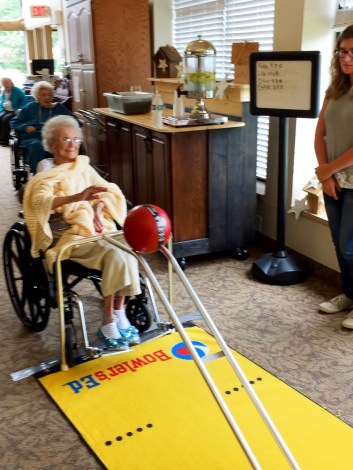
IMG_5718

Almost two years later, my gram just passed away.  This picture was taken just a few weeks before her passing.  Doesn’t look like she was so near now, does it?

Two years later, with no one by her side when she took her last breath.

Alone, despite an abundance of children, children’s spouses, grandchildren and great grand children.  Not even a nurse or an aid present.  Alone.  Her last breath somewhere in a thirty minute spread that we will never exactly know when it happened.

A tale I tried hard to prevent.  A statistic I never thought my family would be a part of, even in their worst moments.  A tale that is too frequent in nursing homes, hospitals and home settings.  A trend that estate planners are seeing grow at a terrible rate, and one that is a horrible reflection on what is going on in our society.

It is a tale that left me weeping for two days rather than rejoicing that she is finally free and at home in God’s arms.

A tale that must be told.

You see, I didn’t grow up super close to this grandmother.  Everyone who saw me visit or advocate for her always thought that must be what motivated me to check on her so frequently.   Actually I was not close to either grandmother.  My mom’s mom died when she was very young.  My step grandmother had some good moments, but too many of them were spent on her bathroom floor scrubbing little one inch white tiles with a toothbrush.  “I am going to teach you kids better than your parents do” often rang out from her kitchen or living room.  Too many moments like that to disregard and label as “love.”

This grandmother, my dad’s mom, lived in another state through much of my childhood. We saw these grandparents at the holidays and the occasional vacation.  However, at some point, they moved back to our state onto a lake.  From that point on, we could visit them regularly and did for a couple of years.  There were no bathroom scrubbing or harsh chores.  There were no assumptions that we were “bad” nor any undercurrents of resentment and dislike that we didn’t understand.

Instead, there was a set of jars.

I remIMG_5869ember seeing them and being in awe.  My step grandmother especially loved dinner time. But not in a good way.  Food was not a pleasant experience for any of us children, so these jars were fascinating.

They were filled with things like Hostess cupcakes, candy, Peanut Butter Cups, Ho-Hos, and more.  Just sitting there.

I remember asking my grandmother about them.  She smiled as she cooked breakfast, and said, “Take one whenever you want.  They are there for you guys to enjoy!”  I could scarcely wait to lift the lids to peak in.  Soon, it became a morning ritual when we were visiting, to grab a cupcake and head out to the dock.  It is one of the fondest memories I have of her, and now I have my own set of jars.

Now my grandmother was not a saint.  None of us are.  As the years went by and time and distance passed, she developed strong relationships with some of her children and grandchildren while letting the others be more distant.  We had the obligatory family functions, but outside of that, there was little contact on a regular basis. And by then, as an adult, I was already living my own life well without that relationship developing further.

But many years later, my dad got sick.  Then he passed.  Six months later, his oldest sister died too.  And there was my gram, at the second funeral of another child, when I started to wonder what was in store for me ahead in the end of her days…

So many people believe that living a Christ-centered life is professing Christ front and center in your life constantly.  Words blaring, no one can miss the testimony.  It is loud. Sometimes harsh and judgmental, but assuredly, meant not to be.  Oftentimes, their words assume you couldn’t possibly know Him because you haven’t “heard” their story, been to their church, or confessed your need for Christ directly to them.  This is especially true if you are not also being loud about Him to others.  It is displayed faith that can’t be missed.

But, my friends, faith is not about what is spoken.  It is about what is lived.  It is about how you live.  And most importantly, how your life impacts others.  We were not put on this world alone, nor was that His design.  Our faith isn’t meant to be spoken into lives but impacting them by how well we live our days.

I was on vacation when the call came two weeks ago.  “Gram is being taken to the hospital. Her foot is black and it is going up her leg,”  my cousin said, who was extremely close to her.  Her voice cracking and unsure.  I picked up the phone and called my mom, asking her to join my cousin at the hospital to see what was going on and advocate for her since her dementia and understanding would be limited.

I arrived home a couple of days later and went straight to the hospital.  Her pain was still not fully under control.  It took another 48 hours for hospice and the hospital to get her to a restful state–often under the constant watch of a loved one, an advocate, who could speak up when she displayed discomfort.  A lesson I had learned long ago.  Hospital and medical staff mean well but they are often over-tasked with too many patients making it hard to be readily available.  It is why people in the hospital need a constant advocate, especially those with limited cognizance.

Once we got ahead of the pain with the medicine distribution, it became a waiting game at the hospital with my gram moving clearly towards home.  Her days were numbered and hospice estimated that she would pass in 24-72 hours.  As I sat with her, and in her room for hours, I began to notice that people really struggled to do the right thing.  I began to hear things that weighed heavily on my heart as she laid there with her eyes closed, ears still listening, unable to move or talk.

“You need to worry about your own health!  You can’t stay here tonight (or another night)!!”

“I’ve already said good-bye to grandma.  I am just here to support my parents!”

“Why does she have an IV?  She is supposed to be dying!”

“I am so glad she has you to take care of  her and be here for her.”  Let me translate this, “I am so glad I don’t have to do this!”

“It is just tearing him apart to see her.  It took him a half hour to stop crying!  There’s no way he can come back.”

“I just spent the last three hours outside at a wonderful picnic of a good friend who made some fantastic Indian food.  It was so great!”

“No one should have to go through this!  We should be able to end our lives when we want.  I don’t want to be like that.”

“He needs to tell her all that he is upset about before she dies so that he doesn’t feel bad the rest of his life.  I don’t want to lose him because he is filled with hate and resentment.”

“He will stay the night with her.  You don’t need to come back.  We won’t leave her alone.”

Should I add in any more?  Do you see why I wept for two days after hearing that she had, indeed, died alone.  Without an advocate despite doctors and tests scheduled to come that early morning. Without a voice, when an abundance of voices were able to speak. No one to stand in the gap of the night and early morning as her soul journeyed home.

Nine hours.  Nine hours of new medications that we weren’t sure would keep her comfortable.  Her IV had fallen out and couldn’t be reinserted.  A transition that should have been managed closely in light of our experiences, but wasn’t.  Three hours of phone calls to hospice to make sure the right oral medications were distributed and that it would need to be closely watched, followed by reassurances that they would.

Words, my friends, don’t prove faith.  Actions do.

“The Lord is a jealous and avenging God; the Lord takes vengeance and is filled with wrath.”  Nahum 1:2

And that is why when I read these words, I felt a strong nudge to share them.  May it help you to see what you choose to do (or not do) does, in fact, strongly matter to God as well as impact others and their journeys. Choosing right over wrong isn’t an opinion; it is the foundation of character and integrity.  When we choose not to do right, it can’t just be swept under the carpet as not mattering.

At Dictonary.com, it states that when used in the Bible, “jealous” means that God is intolerant of unfaithfulness and rivalry.  Folks, I think He is speaking here of the crisis that is occurring in our world.  People not caring for people when they are more than able to; when they are supposed to; when by the basics of humanity, they should.  God pointedly gives each of us this task with the relationships He has given to us or the path of another He has placed into our lives.  In His Word, He continually instructs us to take care of our families, our elderly, our widows, our parents, our children, the orphans, the injured, the aliens, the poor, the needy, the sick, the imprisoned, the hopeless…

Nowhere does He instruct, “Pawn it off on another.”

He doesn’t qualify it with “only do it if you have time.”

Nor does He say, “Go to the picnic and eat, drink and be merry…for your grandmother doesn’t need comfort in the end moments of her days.  Her caretakers don’t need support and relief.”

He doesn’t yawn and murmur, “Sleep, do not worry about what there is to attend to.  It will surely be there in the morning.”

Paul, the great apostle, traveled by the direction of the Holy Spirit, to visit disciples while having a thorn in his side, being beaten, chased, threatened, shipwrecked, and the list goes on and on.  While we will all have days where our health is not at its best, should we be using that to justify being apart in the last hours of someone’s life when it is really not emergent?

You might wonder about “rivalry” but this seemed clear to me.  All I heard for the five days I was at the hospital was family members repeatedly comparing, competing and trying to outdo each other with who had the most going on or the hardest time.  Let me prove that I can’t do this and you can, or I am doing this and you are not.  “Rivalry” seems like the perfect word to use when we seek to prove our claims over another.  But I think there is more.  Is it possible that we are provoking God to anger when we tell Him that our “plans” are more important than the mercy, kindness or comfort we may be able to give another at that time?  Might our excuses and justifications rival God’s will in our lives?

“The Lord takes vengeance on His foes and maintains His wrath against His enemies.”  Nahum 1:2

Whew, that’s a little frightening!  So glad this is not me!  I could never be a foe or enemy of God.  I am saved; I am “good” with Jesus.  Really?  I think that self-righteous mentality creates a lot of problems in this world and with God.  A “foe” can be anyone who feels enmity, hatred or malice towards another. But better yet, it can be someone who is opposed in feeling, principle, etc…to something.  What about God’s principles of kindness, love, mercy, forgiveness, truth, hope, taking care of others, being the Good Samaritan when there is nothing to be gained for oneself?  How often do we check to see if our choices are at odds with any of God’s principles, instructions, feelings, etc.?  Can we put down our selfishness–our plans, issues, excuses–long enough to be His vessel of light or love by how we treat another?

Enemy is even better.  Of course, it can be someone we feel hatred towards or who feels it towards us.  But did you know that we also become an enemy when we foster harmful designs or engage in antagonistic activities against another?  You better believe I put a stop to the idea of my gram having to listen to her child, who has had many decades to deal with his and her issues, unload on her at this point in her life.  How the heck was that design in line with her best interests or what God wants at the end of a life?  What happened to walking someone peacefully home?  Or how was it not antagonistic for a son to demand answers for why we were insisting on her having an IV when it was the best method to hold back the building pain of her dying and rotting leg?  A process, we were told, that held a very large potential to be unfathomably painful even with pain medication.

An enemy can also arise from something harmful or prejudicial.  The obsolete definitions included inimical and ill-disposed.  And by golly, I am not so sure those parts of the definitions should be considered obsolete in our current world.  “Inimical” is when you are unfavorable or have an adverse tendency toward another. Further, when you are cold or unfriendly.  Ill-disposed is being unfriendly, having a negative attitude, being unsympathetic; best yet, having an objectionable attitude.  And prejudice contains lots of definitions but what struck me the most was when we choose to harbor unreasonable feelings, opinions or attitudes, especially ones that are hostile towards another.  All of those definitions are readily available to explore at http://www.dictionary.com.  Sadly, they are lived out frequently in settings where someone is dying as well as in the lives of many in our nation.

How is it that we have become so lost in our own little worlds that we don’t realize our actions and in-actions hold the potential to make us enemies and foes of God?  How have we become so very blind to the impact of our choices?  She was 95 years old with a few remaining children left, fifteen or more grandchildren, and oodles of great grandchildren. She had spent the better part of her years, imperfectly, being there for them.  Nodding her head, putting out jars of goodies, and opening her door whenever they found the time for her, even when most just wanted something from her.

I find it interesting that when we find someone repeatedly choosing not to be angry with us even though they could be, most delude themselves with the idea that that person has no reason to be angry.  All is good and right because there are no consequences.  Our choices must not have really mattered.  But let us beware of that:

“The Lord is slow to anger and great in power; the Lord will not leave the guilty unpunished.”  Nahum 1:3

Just because God is slow to anger, even though He holds the power to greatly display it, does not necessarily mean our actions and choices are okay with Him.  This family had a lifetime to do right by her and most never did.  If God is all about love, truth and righteousness, can this really go unaccounted for?  Is His gospel that cheap that there are no consequences for wrong and harmful choices?

Let us all think on that for a bit.

Our choices have consequences.  We can trust God for that and with that.  May our country, our families, our world, and those in it start to pay attention to the idea that speaking of God as if we know Him isn’t a pass on doing His work in this world.  Choosing to ignore or turn away from the right decisions and actions have a negative effect on this world, on lives within our reach, on relationships that could exist but can’t in the vacuum of “I only do what works best for me”.

Nine hours doesn’t seem like that much, now does it?

Nine hours to make a difference in a life…

Gram, may you rest in peace knowing that we are truly so sorry for trusting those we mistakenly thought would value the little time you had left.  We have been given peace that you know we would have not left you alone had we been given a choice.

Heavenly Father, thank You for helping us to come to terms with the end of her hours. May we trust You with our days ahead and give this world the best we have to offer, instead of nothing or very little in the way of empty words.

“The Lord is good, a refuge in times of trouble.  He cares for those who trust in Him, but with an overwhelming flood He will make an end of Nineveh; He will pursue His foes into darkness.”  Nahum 1:7

 

The mercy in hello

“But if you had known what this means, ‘I desire mercy and not sacrifice,’ you would not have condemned the guiltless.  For the Son of Man is the Lord of even the Sabbath.”  Matthew 12:7-8


As I wrote the post about the effect of a simple “hello” on Virgil, I was really struck by the Scripture listed above.  It seemed to say so much…about Virgil and the many that we potentially interact with each and every day…and the choices each of us make.

Think about this:  God isn’t so much about what we are doing, but why we are doing it or not doing it.  “I desire mercy and not sacrifice.”  By the nature of this instruction, we probably need to ask ourselves, what is motivating me, my actions and my words?  Am I doing something because I am seeking to be kind, truthful, hopeful or compassionate?  Or am I permitting injury or disadvantage to something or someone for the sake of something else or for the benefit of myself.  Those are some of the contrasting definitions of mercy and sacrifice.

Let me give you this example.  It is great that I am sacrificing my time and energy to check on my grandma.  It is easily something I can justify with Scripture’s instruction to take care of our families and elders.  And so, if I walk in there, trying to take the easiest, quickest route to her to avoid the many others who may potentially cross my path and slow me down…is that what He truly desires for me in living out His instruction?  Is that the goal He wants me to aim for?  To go about that visit as quickly as possible for the benefit of my timetable rather than maybe His and theirs…

If I never smiled at Virgil and said, “hello”, is it possible that those moments of mercy would have been lost?  “Mercy” is defined as “compassionate or kindly forbearance shown toward an offender, an enemy, or other person in one’s power.”  www.dictionary.com.  It is compassion, an act of kindness or favor.  Id.  Think on it this way, I have the power to walk by in my hurry and duty, but can I forbear from executing that power and take a moment to show compassion and kindness to someone else?

Now, let’s explore a little further into the Scripture, “But if you had known what this means, ‘I desire mercy and not sacrifice,’ you would not have condemned the guiltless.”  I emphasize the last portion because it really spoke to me.  All those seniors, sitting in wheel chairs, waiting and waiting for someone to engage them.  And yet so many, myself included, walk by ignoring or purposefully trying to avoid engagement.  Isn’t that a form of condemnation in a way?   Eyes on the floor so that you will not “see” them motion you over.  Making a b-line to where and what you are trying to do–sacrifice at the expense of mercy.  I don’t see you, and I am refusing to validate you exist.

The most powerful word to me was “guiltless”.  Many times life contains unpleasant parts. Aging will happen to all (besides Captain America).  But let’s go deeper than that.  When something hard or painful is happening, we want an “answer” for why.  A reason that justifies the trial or struggle or our involvement.  Sometimes, however, people are struggling with things we can’t understand and there are no easy answers.  The guiltless are those who are innocent; they have done nothing wrong.  They have committed no crimes or offenses. There is no deserved “reason” for their suffering.  But how often do we start out judging the validity of their need or situation before even knowing anything. Thoughts like: “They are not in need of my time.”  “I am sure someone else will step up to do it.”  “It is not my responsibility.”  “They don’t know me…”  “They won’t notice, or it won’t matter, that I didn’t _____.”

Can it be that how we treat others, even in the smallest of ways, can convey the mercy needed to help them through another day?   Better yet, would we be more faithfully serving and following God if we took the mindset that those we encounter are guiltless and in need of our mercy?  Could it be that the Creator of this earth, who is actively moving, has deliberately placed these moments into our schedules as opportunities for us despite what we have “planned” out for our day?  Can we trust that His lessons of mercy, what He longs for more than any sacrifices we might make, are more important to Him and this world than almost anything else we can do or learn?

Mercy, compassion, forbearance, kindness, etc.  Attitudes and framework that hold the potential to shine the light of heaven into dark and lonely places on this earth.  Often, with something as simple as a “hello Virgil”.

Let us not forget that He also emphasizes in this verse that “He is Lord of even the Sabbath.”  Could His mention of “even the Sabbath” be God trying to draw our attention to those situations that involve what seems like rest (those not actively needing our engagement).  Many times a physical or cognitive disease debilitates someone to the point that they can no longer actively engage society or life as they once did.  Thinking expansively, sometimes, so does tragedies and trails.  Could it be that He is reminding us that our thinking may be misguided when we quickly dismiss someone else as not needing us or our attention?  To truly understand that He is Lord of those situations, we must acknowledge them, acknowledge that the quality of their moments are just as important to Him as ours are.  Just as with us, He does not judge their value by their productivity. Neither should we withhold mercy because it does not appear on the surface to work for us or for them.  Acts of mercy, freely given, affirm our understanding of His ways.  They are His light.

If we trust and believe this, then we should strongly consider steering away from doing just the things that we see as most useful to our lives.  Instead, we need to purpose our hearts to move with truer mercy towards those He places in our paths, trusting that their situations–as uncomfortable as they may make us–are an important part of His plan and timing in their lives and in our own.  These moments are life lessons on how to apply mercy in the real world rather than just seeing its definition on paper.

The Sabbath rest that my grandmother and Virgil are in these days shall some day likely be my own.  Someone’s depression, illness, loneliness, tragedy or challenges may some day be ours.  Wouldn’t it be better and wiser for us to learn the many nuances of mercy now, for one day we may long and need such mercy to be returned to our souls?

“But go and learn what this means: ‘I desire mercy and not sacrifice.’  For I did not come to call the righteous, but sinners, to repentance.”  Matthew 9:13


Uncharted paths

“We have thought, O God, on Your loving kindness, in the midst of Your temple.  According to Your Name, O God, so is Your praise to the ends of the earth; Your right hand is full of righteousness.”  Psalm 48:9-10


When my grandmother was placed in a nursing home, her children had been told that she had little time left.  She had been placed on hospice in the hospital and that transferred with her to the facility.  All of it happened quite suddenly.  What seemed like a simple fall became a death sentence for her to many.

But my grandmother has always been quite feisty and independent. Before all of this, she had long lived alone.  Cleaning her home.  Venturing to garage sales.  Mowing her grass until her hips had to be replaced.  She gardened, grew tomatoes, liked to chat, smoked constantly, and absolutely loved going to church on Sundays. My grandfather had passed away a couple of decades before and so have most of her friends.  She has even lost two children as others came and went.

So, while on hospice in the facility, it became very trying on us to watch her decline in such an unnatural way.  She didn’t really appear to be dying on her own accord, but rather she was becoming ever so dehydrated and weak from the protocol that was advised in her case. Being that she was very independent, God raised up independent thinking advocates who began to inquire whether the quick assessment that she was dying was actually correct.  After diligent discussions and prayer, we removed her from hospice and transferred her care to the nursing home solely.  Much to their surprise and our relief, she slowly regained strength and awareness. She began to eat and drink.  In the beginning, she still slept a lot but started to have more moments of wakefulness.

And it was in one of those moments, early on, that I was given a gift…one of many that periodically come.

I visited her one evening about eight weeks after the whole ordeal had begun.  I was delighted to find her with her eyes open and an awareness on her face that reassured me that she knew who I was.  I said, “Oh grandma, I am so glad to see you awake!” as I took up her hand.  She pressed her other hand on top of mine and said, “I am glad too!  I need to talk to you about what has happened?  My things.  How did I get here and where am I at?”

I spent the next twenty minutes guiding her through the events of those last two months, skipping the unnecessary details.  While she was confused, she was relieved to find some understanding and a familiar face.  At one point, she eagerly exclaimed, “I am hungry!”  I offered to get her some food, and told her again on my way out of the room to the kitchen, “I am so glad I caught you awake!!”  I am not sure I will ever forget her face, her hand raised in the air, or the words that came out of her mouth next, “Better yet, I am ALIVE!!!”

Now living in a facility isn’t the most pleasant of circumstances.  It is not that she resides at a bad facility.  Quite the contrary; they are very good and very caring.  But, it is a place that many come to die, not live.  Freedom becomes defined differently than what many of us know on a healthy, youthful day.  While she has now returned to a certain level of independence–she has gone from being bedridden to freely wheeling herself around the halls and rooms of this facility–she cannot leave.  And so, there are days where the sadness outweighs the happiness…the boredom and lack of the familiar pile over what little good that happens.

But every once in awhile, when I catch her up and awake, her smile and gratefulness to see me again is overwhelming to my soul.  It hit me after leaving from a visit one day that maybe this trial, this need to tend to her–to be there for her, isn’t fully about duty and kindness to family.  Maybe, just maybe, God is offering me the chance to make new memories with her that will replace the old.  New smiles and levels of caring I had not experienced nor given.  Better memories, if you will, that might fade the old and indifferent ones…

Had she been gone too soon, I would have had no late night talks to remember.  No special grins or words of delight.  No memories of her reaching up to hold my face and tell me that I am beautiful.  No wiping away my tears, the evening of the day that my mother-in-law had unexpectedly passed.  She had seen my face and a look of questioning had fallen across hers.  When I tearfully shared that I had lost someone dear to me, her comforting words gave me a glimpse of heaven in action as she ever-so-gently said, “I know.”

Without this time, I would have had no chance to advocate for her.  No opportunities to reassure and remind her of those who care.  No chance to make her smile, to help her find moments to still laugh and delight, to ensure a better quality life with where she is at in her journey.  Truly, a level of caring that I had not seen from her before, nor do I think she ever saw from me. And now, even when she’s not entirely present in mind during a visit, I have come to appreciate the gift of just her presence. Something I had not really known before all of this.

My friends, try hard not to gauge reaching out to help another based on your perceived idea of closeness.  Instead, look at the opportunity as holding the potential to venture somewhere new; a journey–not always easy or desired–that you cannot comprehend or understand until you actually decide to walk the uncharted path and discover its richness…

“Walk about Zion, and go all around her.  Count her towers; mark well her bulwarks; consider her palaces; that you may tell it to the generation following.  For this is God, our God forever and ever; He will be our guide even to death.”  Psalm 48:12-14 (NKJ)