It’s the little things that trip you up

While working with the aged, I have learned a couple of valuable lessons.  One, in particular, has become crucial in order for someone to remain in their home as long as possible without the need for additional supervision and care.

Believe or not, it’s rather simple in elongating their stay:  Get rid of the rugs!

Now most know not to climb a ladder as they grow older and more frail.  Many are very careful with the stairs.  Icy days are stay-at-home days for fear that a good fall will come with a trip outdoors.  But sometimes, the things that seem like they wouldn’t impact us at all actually become the biggest hazard to our safe passage in life.

What I’ve watched over time is that, as we age, our muscles decline.  It’s rather gradual, but suddenly lifting the bag of flour isn’t quite as easy as it used to be.  Neither is climbing up a regular set of stairs.  A full jug of milk can quickly become problematic.  The legs and arms wobble a little bit as we lift our muscles often making the body unsteady.  It is interesting because something as small as a two inch difference in the height of a step can make or break whether someone is able to enter an abode.

And the same is true for rugs.  You see, because lifting becomes more tedious as we age, we tend to drag our feet more.  We lift our legs less higher.  As a result, rugs become a nightmare waiting to happen.  The foot drags, catches the floor rug, the combination throws the body off balance, and down we fall.

Crash.  Break.  Sprain.  Ache.  Ouch!  “What happened?  How did it happen?  That rug that has always been there catching the dirt just caught me!?!  I never would have thought!”

Something so small.  Something lying flat and readily safe to most becomes one of the biggest risks to those struggling with their balance or lifting their feet.

Those things that catch water and dampness in a bathroom.  Those precautions that keep us from sliding across tile floors.  Those entry ways that catch the remnants from the outdoors before they track all over inside.  A great use in the right setting with those able; but disabling to those who have no room to spare.

The interesting thing is that fears are similar in a way.  We often seeing the big ones and are able to avoid them.  We don’t run in the street for fear of being hit by a car.  We watch for holes in a field when hiking through uncharted territory.  We avoid the big growling dog because he is readily visible to us as we walk by.

And so it is with our big fears.  You know what they involve and you know how to avoid them.  You likely have no problem identifying them and telling others that they exist.  You know your biggest fears–as both a friend and a foe–but what about your little ones?

You know the ones that can begin to cause the same apprehension in you but you shoo away.  The small nudges that change your cause and direction without you even thinking about it.  The pauses, the slight shiver, the hesitations, the quiet shrug, the drooped shoulders, the avoidance of eye contact–the little ones.  Are you aware of what it is that you are afraid of even though it is not screaming for your attention like your big fears do?

For as long as I can remember, I have been afraid of heights. I will tell you that straight up. Because of that fear, I generally try to keep my feet on the ground when possible.  I am fully aware of my fear and how it impacts me.  Over the years, I have worked to stop it from controlling where I go in life, especially in situations where the fear is loud and scary yet likely untrue.  Seeing New York City from the Empire State building was a perspective I would never have gotten from the ground.  Looking over Seattle’s harbor from the Space Needle was breathtakingly beautiful and worth every moment my heart pounded.

But lately, I have become more aware of the power behind “little” fears.  The ones that can be so easily dismissed; the ones you hardly notice.  The quiet fear of rejection, in most cases, does not keep someone from venturing out and among others.  While you can experience enough to keep it hidden, the fear encourages you to build strong walls and keep a safe distance.  The fear of failure cannot rule most in a way that is overtly noticeable because life is a series of beginnings and endings that happen every day despite the risk of not succeeding.  And yet, it might keep you from attempting “bigger and better” opportunities.  The fear of not being enough may be what is gently guiding you into pleasing others at all costs to yourself.

In a way, little fears are like the little floor rugs of life.  They, oftentimes, are borne of necessity in a moment to capture or prevent something from mucking up life.  But as we move on from there, and life progresses, these fears may become a hazard that trips us up unnecessarily.  Understand, the risk is unnecessary since it is the fear that is now the cause of our harm.  Just as removing rugs increases the safety in a home of those who are aged, rooting out small fears (that have been in our lives too long) increases the odds of us living life to its very fullest.

What if that little fear of rejection keeps you from the full enjoyment of truer, deeper relationships that life is now meant to bear?  What if there is something new waiting to be tried, and what if being successful is not really a part of the picture anymore?  Moreover, what if others actually applauded your attempt rather than only your accomplishment–the fear wouldn’t even be necessary!  What if you are already more than enough and truly need to know it?

In Jonah 2:8, God did not specify whether the size of your fear matters when He pointed out they were worthless.  Honestly, I believe He knew, and knows, that the little things we can’t see, or don’t appreciate as serious enough, are often the things that catch us and bring us down. The big ones, as we so easily see, are the ones we have no problem avoiding.

So, my friends, can you take some time to try and spot the little fears that might be worthless in your life as well as the big ones?  Let me give you a bit of advice:  Most of the aged fight tooth and nail not to give up their rugs, for they are confident they will not trip over them, largely because they believe it is the only way to keep the floors clean.  Trust me, it is not.  Even more important is understanding that an ounce of prevention is worth a pound of cure.   Don’t insist on clinging to something that will increase your likelihood of preventable harm.  It is just not worth the trip!

Blessed is the man who always fears the Lord, but he who hardens his heart falls into trouble.”  Proverbs 28:14

Worthless fears and fears that have worth

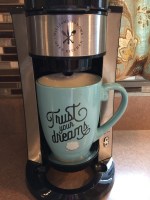
img_6544I found this coffee mug as I was looking for new things for my kitchen.  The color matched perfectly with our newly repainted walls, and so I thought, “What the heck!”  In the cart it went, and soon it was on its way home with me.

The funny thing is–I don’t drink coffee.  No one in our household does.  I’ve got a cupboard full of coffee mugs that I routinely weed out.  I don’t even drink tea, though I have begun to enjoy it more.  So it was rather interesting that I bought myself a large coffee mug.  As I examined it again, at home, I found the words speaking to me even though it was the color that had sold me on it:

Trust your dreams

As I looked for a place to display it, it settled nicely into my new coffee station. Again, img_6545the irony of having a coffee station doesn’t escape me, but we do have a lot of guests who enjoy a warm cup of coffee from time to time when visiting.  The words on the mug, resting in its new home. visually sparked a thought for me.

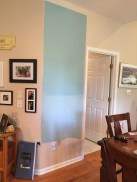
We’ve been in this house for a long time, and as with all houses that are well lived in, the paint and decor have begun to show their wear in many rooms.  I haven’t had a particularly strong urge to change things until I came across a blue that I saw while out one day.  I walked by it again and again…a cereal bowl.   Not needing another bowl, I couldn’t quite understand why it was drawing my attention until I realized it was the color that was captivating me. img_5949Needless to say, the bowl became my color swatch. From there, a sample was brought home, and put up on the wall in no time.  And unlike prior times where I would put up multiples patches of colors to compare, this one sat, alone, on the wall as I watched for how the lighting might change it throughout the day and night.

With most projects, you find an impetus for change and it grows from there.  Since we were going to paint the walls, well, we needed to paint the ceiling.  Because we were painting the ceiling, it seemed right to change out the light fixtures that we had always wanted to change.  And what the heck, since we were changing things, why not add a tile back splash to the kitchen counters like we had wanted for some time?

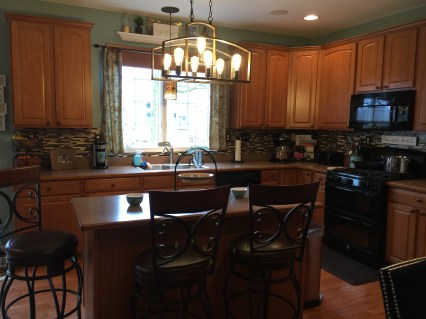
img_6546With only a color for the wall, things began to weave and take shape, though I really had no other thoughts about the change. Browns, blues and gold became the palette that showed itself to me in all sorts of ways. New fabrics and metals came with new bar stools and lighting.  I found myself sewing basic window dressings and hanging up new and old picture frames that refreshed this treasured living space.  Before I knew it, and with a little trepidation, the “dream” of change had begun to take more shape. All the while, I wondered what it would look like when it was finally done.  I pondered whether people would like it. Would they fail to understand the tie in of light touches of gold and the blending of the browns that had fallen into place? Deep down, would they see this vision, my new borne “dream”, the way I was?

Along the way, when all that could be seen were bits and pieces, I would occasionally hear my husband cautiously say, “I am not so sure about that.”  I would smile and say, “Let’s see how it plays out.  We can always return it.”  As everything finally came into its proper place and the last finishing touches were put on, I found myself in love with what had come to be.  My husband, smiling, repeatedly shared just how much he, too, loved the new look. Those who walked into the kitchen remarked how amazed they were with it–love radiated from their tones and words.  More than once, we were asked if we had installed new cabinets, which we hadn’t.  People were impressed by the change the color alone had made.  Those few changes had a big impact on the warmness and draw to this place we love and “live” in much of the time.img_6556

It was there, as I stood looking at the words on the mug I had bought, that I realized how easy it is to let the fear of change prevent dreams from coming true.  Trust your dreams implies moving forward, not letting fear stop dreams from coming to fruition.  For some, it might be fear of failure that holds them back. For others, it might involve fear of rejection. Still some might fear that it will be too hard to push through and bring about the needed change.  All these hesitations drawing us back into the status quo.

“Don’t change.  You’ve got it good.”  “This dream isn’t necessary.”  “No one else thinks it needs to be done.”  “What will it really matter?”

Those little nagging thoughts that hold down dreams, and without mercy, seek to devalue such aspirations as worthless.  That discouraging inner voice that strives to defeat the need for change with taunts of failure and vice, dread and scoffing.  As movement begins in aspiration and inspiration, waves of questioning and doubt cascade into the free flow of forward motion sending it backwards, if only for a moment.

You see, the key thing about fears is knowing that we were designed to have them. Fear, in and of itself, is not worthless.  God knew what He was doing when He programmed us to have them.  We just might need to outrun something that can harm us motivated largely by the fact that we are afraid of it.  The feeling of alarm may be the one thing that saves us at an inopportune moment.  Fear has a purpose that gets our attention and, in healthy cases, is trying to protect us.  It is a protective warning system that should draw us away from things that can harm, hurt or destroy us.

But, as with all things, you can have both good and bad…

“Those who cling to worthless idols [fears] forfeit the grace that can be theirs.”  Jonah 2:8

Friends, God does not say in this verse that fear is entirely wrong.  Instead, He qualified fear with the word “worthless”.  That is important to note because if you think that in this life you should never be afraid, you will likely get hurt when you shouldn’t have. Remember, fear has a purpose–by design–and is not inherently wrong.  What is wrong with fear is when we engage in believing and following the ones that are worthless.

Worthless means “having no value; having no value of character or virtue; having no dignity or excellence.” Noah Webster, 1828 American Dictionary of the English Language. Ah, God is now helping us to understand better by going a little bit deeper into what fears are wrong.  The fears that will scream for us to cling to them, the ones that will be most tempting to believe, will be those that truly have no value, no truth to them.  By embracing such fears, your character will not be changed; there will be no virtue gained by staying in place.  You will add no dignity to yourself nor your life nor to the live of others. You will stay in mediocrity instead moving towards and striving for excellence.  Those worthless fears will say:

“Stay here.  Trust me.  It is not worth it. Change is too hard, and fleeting at times, but you can trust me to guide you to staying safe.”

Now, let’s go a little further and look at another word:  value.  In the definition of worthless, we are told that when something is worthless, it has no value.  Why not seek to understand what value truly means?  To see whether it can shine a light by helping us determine how to measure whether our fears truly have worth?

Value stems from the Latin word, “valor”, which means “to be worth”.  Id.  In the definition of good ole’ Noah Webster, Noah tells us that “[t]he real value of a thing is its utility, its power or capacity of procuring or producing good.”  He goes on to remark that things can have an estimated value as well as a real value.  Value also can be measured by price, worth, high rate, importance, and import.  Id.  To understand whether our fears have worth, we must determine with accuracy whether this fear is producing any true good.  We must not believe fears on only their face value; we must truly examine them and their claim of right in our lives.

Can we now glean better that there are fears that have worth, i.e., value, and fears that do not?  God does not say in Jonah 2:8 that those who cling to fears forfeit grace.  He instructs us, instead, to measure our fears by their worth.  For it is when we hold fast to these type of worthless fears–that have no true value–that we lose something that will be better for us.  Whatever that may be lies in the grace that is waiting on the other side of the wall of our fears.

In the synonyms for worthless, listed at dictionary.com, you will find some interesting words–words that can describe how we might feel when under the direction of fears that do not produce good:

abandoned, empty, futile, good-for-nothing, inconsequential, ineffective, inferior, insignificant, meaningless, miserable, no good, pointless, poor, sterile, trivial, unessential, unimportant, waste; fawning, groveling, humiliated, low, miserable, outcast, servile, submissive; failed, unproductive; common, disgraceful, dishonorable, lowly, mean, offensive, shameful, sorry.

Ask yourself this, can you identify fears associated with any of those words?  When you read them do you feel any physical or emotional trigger inside of you?  A desire to look away, shrug off, or stuff down; to dismiss or say it was no big deal as a memory pops forward. Can you trace that back to a fear or the moments it impacted?

Now ask yourself, how many times did that fear lead you to those feelings or reactions rather than protecting you from them?  If more times than not, it led you to feeling miserable because it wouldn’t let you participate in happiness, meaningless because you stayed put, a good-for-nothing because you did nothing, pointless because you never tried, trivial because your fear has removed your self-worth or worth to society, humiliated because you feel like you should have or shouldn’t have, outcast because you are afraid to take part or are afraid you are not wanted, submissive because you are fearful to take a stand, unproductive because fear says there’s just too much to do, disgraceful because fear held you back from doing right, offended easily because fear says you are not as good as they are, ashamed because you are afraid you have no worth, sorry because you are afraid you have messed up yet again…then my friend, my estimation is that you are clinging to a fear that is worthless.

It is not you who holds no worth; it is the worthless fear that has no value.

There is good waiting to be released from the bondage that such fear holds back. There is value in pushing past those useless fears and embracing the grace that awaits on the other side. There are dreams God wants you to trust in, even the simplest ones, if only you would become willing to let go of that which unnecessarily constrains you …

Trust God with your fears; don’t let them be the predominate influence in your life. Examine them; find if they are truly adding goodness and value to your days and moments. And when you find that they aren’t, choose Him over the fears that are holding you back. It is where you will find grace in fullest measure and where your worth will become better known to you, for your value will no longer reside in your worthless fears. Rather, your courage and strength to face the truth of what you fear will become worth more than you can possibly measure.

img_6553

“Those who cling to worthless idols forfeit the grace that could be theirs.  But I, with a song of thanksgiving, will sacrifice to you.  What I have vowed I will make good.  Salvation comes from the Lord.”  Jonah 2:8-9

Forfeiting grace


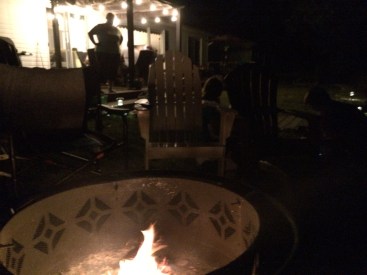
img_1043It was quite a few years ago, by bonfire much like this, that I opened my Bible for direction. My husband and I had just got done discussing the challenges that children can go through, and as they grow, the more difficulties they can face. Like most parents, we lamented and worried about how we could protect our son from such difficulties. Both of our hearts wereimg_0987 heavy as we thought on the painful trials and tribulations life can bring, and how much we wanted to keep him safe and untouched by hurt. As the discussion deepened over the temptations that grow with age, both of us espoused the feeling of fear compounded with uncertainty of how to guard him from the pains that we could remember from childhood or had seen others go through as well as choices made early in life that may later be regretted.

As the evening grew and the conversation ended, I felt more unsettled.  You see, I like to have a plan.  I like to feel like I have some control of what is coming.  I have learned that most people in life desire the same thing.  In fact, I haven’t met a person yet who doesn’t seek to control their world.  Some do it quietly and others do it loudly.  Some manipulate and others are more direct; each seeking to obtain a way to control, though by different means and methods.  And so, I opened God’s word hoping for some insight and instruction as to the anxious feelings I was experiencing about not being able to stop what my son may have to go through off in the future land of growing up.

Much to my surprise, I opened to the story of Jonah and laid eyes on Jonah 2:8 (NIV). Honestly, my first thought was “What?  Worthless idols, clinging, forfeiting?  Where? How? I don’t think so.”   But years of being in His word brought me back to trying to understand more of what this verse meant.  Was it saying something about my life?

“Those who cling to worthless idols forfeit the grace that could be theirs.”


I started with grace.  Grace is not limited to just the concept of “saving grace” as we so often like to think of.  Instead it can involve things like happiness, contentment, trust, goodness; in a way, the qualities of life, a good life, that is produced as the life is being lived.  Understanding that the word “forfeit” meant to give up something, the verse nudged me to ask myself the following questions:  Where and what grace am I relinquishing unnecessarily?  And how?

God had me hooked.  I wanted to know more.  So I dug deeper into the other words and began thinking about my life.  As I explored “idols”, I was able to draw the inference through its synonyms, and the origin of its roots, that fears and passions can become our “idols”.  It was there in the word “fear” that I realized what I was doing.  I was fearing the future unnecessarily rather than living in the reality of the moment where there was no need for that overwhelming fear.  I was forfeiting the grace of the gentle descent of theimg_5884 beautiful sunset while sitting by a warm and captivating bonfire, and surrounded by the peaceful sounds of children’s laughter and joy as they happily embraced the delight of a summer evening.  The gift of those sights and sounds lost in the relentless chattering of those far-off fears…

I soon realized that by tending and nurturing those fears with worry and anxiety of what could be, though was not, I was clinging to my fears rather than turning to God about them.  Honestly, the fears I was so tightly holding onto and wrestling with were not even a part of his world or ours.  They were, instead, a mirage that did not emerge as we drew closer to those points in time.  And isn’t that so often true with those giant fears that clamor for our attention in the here and now?  We plan, we worry, we thwart, and we seek to prevent only to learn that the adversary never presented itself when the time came.

Those who cling to worthless fears of the future lose the happiness and peace that today has to offer.  Let’s break that down a little more…that each moment has to offer. These moments where God is trying to give to us beauty, happiness, quiet, rest, hope, security, reassurance; you name it.  Yet, we shrug them off embracing a fear that time, itself, routinely proves worthless.

It was an incredible moment and verse that truly has not left my side since.  Every time I am pretending to be brave but filled with fear, God either brings it back to my mind or I open to Jonah 2:8 as a reminder (and question) of what I am truly trusting in.  And every time, I think I am done with it or have figured out all of its nuances, I learn something new…

Friends, it is amazing to think that by embracing worthless fears–by clinging to them– we are literally forfeiting grace God intended for us.  We, ourselves, are choosing to let go of the good God has planned and has in store for our lives.

Go deeper yet: how is that not an idol?  When we choose to embrace the fear, that is worthless, over God, who has empowered us to find courage and bravery, are we not then putting something over Him and His plans for us?  Might it be that we are placing created fear over the Creator?

Be willing, my friends, and He will show where you are choosing fear over grace in your life.  Trust me, it will be more than you ever realized…and then as you release its control, you will find more grace than you ever knew could exist in this life.

Oh, the places we can go and things we can do when we refuse to let worthless fears be in control of this life that God has given us to live.

img_6092

“I sought the Lord and He answered me; He delivered me from all my fears.”                    Psalm 34:4